Tuesday morning, 7:42, and Hallie is standing in the kitchen wearing one sock, a school shirt, and the exact brown smear she picked up sliding into second base. If you need to know how to remove dirt stains from clothes, you are in the right laundry room. I have handled playground dust, soccer-field mud, sandbox grime, and the mysterious black streak that appears on every pair of light-colored knees.
The good news is that most dirt stains are beatable. The bad news is that the dryer can turn a manageable mark into a permanent souvenir. The Donovan household rule is simple: treat the stain before heat, use less force than your first instinct suggests, and wash the garment according to its care label. Here is how to remove dirt stains from clothes without sacrificing the shirt before the school week is over.
Start with the stain, not the washing machine
Before reaching for detergent, check whether the dirt is dry or wet. Wet mud should be left alone for a few minutes so you can lift the excess with a spoon, dull butter knife, or old gift card. Scrubbing a wet clump pushes grit farther into the fabric and spreads the stain into a larger brown cloud.
For dry dirt, shake the garment outdoors or brush it over a trash can. A soft toothbrush works well around seams, cuffs, and the ribbed edges of sweatshirt sleeves. Do not use a stiff wire brush, and do not grind the dirt in with a towel. Kids’ cotton tees, jersey shorts, and cotton-blend uniforms can handle normal washing, but aggressive rubbing can rough up fibers and leave a pale, fuzzy patch.
Read the care label before treatment. Cotton and polyester are generally forgiving. Wool, silk, leather details, waterproof coatings, and garments with glued-on graphics need gentler handling. If the clothing is expensive, sentimental, or labeled dry clean only, stop experimenting and follow that instruction. A $4 bottle of stain remover is not worth ruining a team jersey or a baby outfit you plan to save.
How to remove dirt stains from clothes with basic supplies
Once the loose dirt is gone, rinse the back of the stain with cool running water. Rinsing from behind helps push soil out instead of driving it deeper. Avoid hot water at this stage, especially if the stain contains grass, food, or another protein-based mess. Heat can set some stains, making later treatment harder.
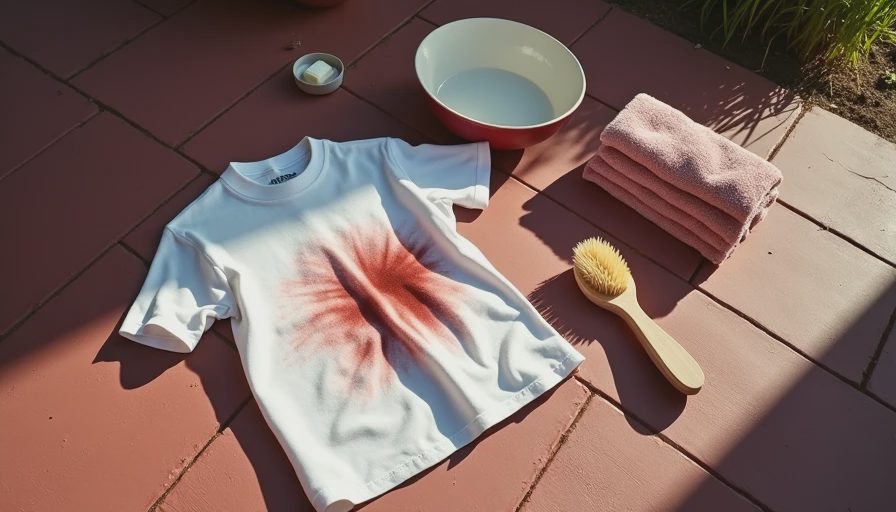
Next, apply a small amount of liquid laundry detergent directly to the mark. Tide, Persil, and Seventh Generation all make liquid detergents that can work as pretreaters; the important part is using a product suitable for the fabric. Gently work it in with your fingers or a soft toothbrush, then wait 10 to 15 minutes. I use a timer because “I’ll remember that shirt” is how shirts end up sitting behind the laundry basket until dinner.
For a stubborn dirt patch, make a thin paste from detergent and a little water. Hydrogen peroxide can help on some washable light fabrics, but test it on an inside seam first because it can lighten dye. Skip chlorine bleach unless the label permits it and you understand the risk. Bleach is not a universal dirt eraser, and mixing it with other cleaners can create dangerous fumes.
Washing the garment without setting the mark
After pretreatment, wash the item using the warmest water allowed by the care label. Cool water is safer for dark colors and some delicate fabrics, while warm water often gives cotton play clothes a stronger clean. Use the normal cycle unless the garment is fragile. Overloading the washer is a common reason stains remain: if the drum is packed tight, water and detergent cannot move freely through the clothes.
Do not pour half a cup of extra detergent into the machine. More soap does not automatically mean cleaner clothes. Excess detergent can leave residue that catches new dirt, especially on athletic polyester. Use the measured amount on the bottle, and consider an extra rinse if the fabric feels slick after washing.
When the cycle ends, inspect the garment in good light. This is the step I skipped for years, right before tossing a still-marked uniform into the dryer. If the stain remains, repeat the pretreatment and wash. Air-dry the item until you know the mark is gone. A dryer’s heat can make the remaining pigment much harder to remove, and it also wastes electricity on a load that may need to be washed again.
What works on common kids’ clothing stains
Mud on jeans usually responds to brushing, detergent, and a warm wash. On a white cotton shirt, a detergent pretreatment followed by oxygen bleach can be useful if the label allows it. Oxygen bleach products are different from chlorine bleach and are often gentler on washable colors, but they still require label and package directions.
Grass stains need patience because they contain plant pigment as well as dirt. Liquid detergent applied directly for 15 minutes is a sensible first move. Greasy playground stains, such as a smear from a swing chain or bike part, need a detergent designed to break up oils. Do not rub cooking oil into a stain just because someone online suggested it; adding more grease to a kid’s shirt is not the shortcut it sounds like.
For red clay, let the garment dry, brush off the crust, rinse from the back, and pretreat before washing. Red clay can be particularly persistent on white socks and baseball pants. Hallie’s softball pants once needed three treatment cycles. They survived, but they did not get to the dryer until the fabric looked clean when dry and damp.

How to remove dirt stains from clothes after they have dried
A dried stain is not automatically a lost garment. Soak the item in cool or warm water with a small amount of liquid detergent for 30 minutes, then gently work the mark from the outside toward the center. This keeps the stain from spreading. Rinse and repeat the pretreatment before laundering.
If the garment has already gone through the dryer, lower your expectations but keep trying. A stain that has been heat-set may fade rather than disappear. For washable whites, oxygen bleach soaking can be worth trying. For colors, use a hidden-area test first. Never combine stain removers, bleach, ammonia, or vinegar in the same container or wash step. Cleaning chemistry is not a place for improvisation.
Do not use a clothes iron over a visible stain. The iron applies concentrated heat and can lock in the mark faster than a dryer. If the first treatment does not work, let the item air-dry, reassess the fabric, and choose a gentler second attempt rather than escalating to harder scrubbing.
A five-minute laundry-room routine for busy dads
The fastest routine for how to remove dirt stains from clothes is to sort the job before the washer starts. Shake off dry soil. Rinse wet dirt from the back. Apply liquid detergent. Wait 10 to 15 minutes. Wash, inspect, and air-dry until the mark is gone. That sequence takes less time than searching for a replacement shirt before school.
Keep a small laundry kit near the washer with liquid detergent, a soft toothbrush, a spoon, a white towel for testing, and oxygen bleach for appropriate washable items. Label the toothbrush so nobody accidentally uses it on teeth. I keep mine beside the detergent bottle, and it has rescued more knees than any premium stain pen I have tried.
Teach kids to report stains before laundry day. “Dad, I fell” is useful information. “My shirt has always looked like that” is not. A quick rinse after practice can prevent sweat, clay, and grass from sitting in fabric overnight. Hang wet uniforms rather than leaving them balled inside a backpack, where odor and stains get a head start.
The key lesson in how to remove dirt stains from clothes is not a miracle product. It is timing, gentle treatment, correct water temperature, and keeping heat away until you have inspected the result. That routine has saved Beckett’s soccer tops, Hallie’s school polos, and Asher’s knees more times than I can count. Recess-tested. Dad-approved.




No comments yet — be the first to share a thought.