Tuesday morning, 7:42, Beckett has one shoe on, Hallie cannot find her jacket, and I am staring at a load of white shirts that came out pink. Pink stains on clothes are one of those laundry surprises that make you question every decision made since bedtime. The good news: most are not permanent. They usually come from a red garment, a crayon, a paper receipt, or a product that transferred color in the washer.
I have pulled enough clothes from the Donovan household washer to fill a small closet, and I have made nearly every mistake available. The biggest one was putting a pink-tinted load straight into the dryer. Heat can set transferred dye, turning a recoverable shirt into a member of what we call THE GRAVEYARD. Here is the practical rescue plan.
Find the Cause Before You Choose a Cleaner
Start by looking through the entire load. A red sock hiding inside a fitted sheet is a classic culprit. So are red pajamas, burgundy towels, dark denim, and inexpensive garments with loose dye. If the discoloration appears as a broad blush across several items, dye transfer is likely. If it is a small, sharp mark, inspect for lipstick, washable marker, tomato sauce, berry juice, or a crayon that went through the wash.
Pink stains on clothes can also come from a red item that has been washed many times. “Old” does not always mean “colorfast.” Some fabrics release dye when washed in warm water, packed tightly, or exposed to a strong detergent. Check the care label and look for the likely offender before washing again. Otherwise, the same red sock can repaint the load while you are trying to fix it.
Do not dry the clothing yet. Keep the items damp if possible, and separate whites, pale colors, and dark garments. A quick inspection now can save twenty minutes of scrubbing later.

The First Rescue Method: Rewash While Damp
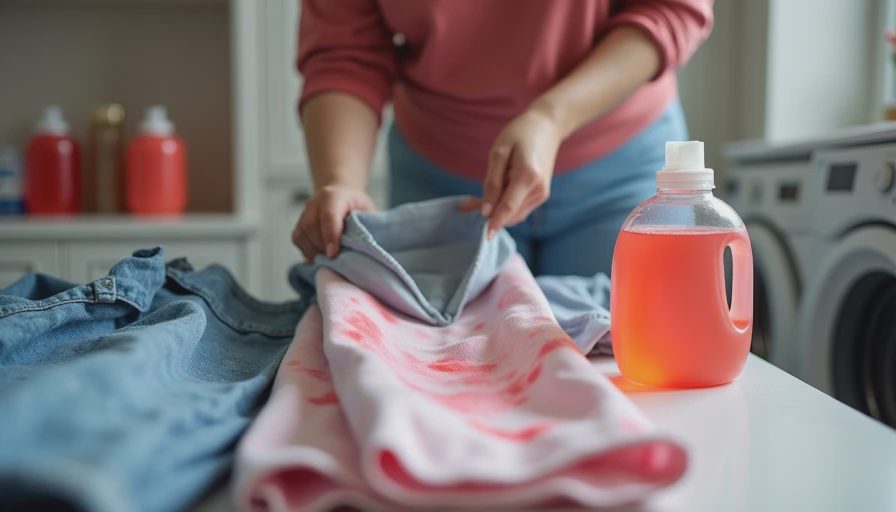
For lightly transferred dye, run the affected clothes through the washer again with the warmest water the care labels allow. Use the normal amount of a quality liquid laundry detergent, and do not overload the drum. Clothes need room to move through the water. A washer stuffed to the top may be efficient for socks, but it is poor at removing dye.
For white cotton shirts, towels, and durable cotton-polyester uniforms, add an oxygen-based bleach product according to its label. Products such as OxiClean Versatile Stain Remover are commonly used for this job. Dissolving the powder in warm water first helps prevent gritty residue. Soaking for several hours can help with stubborn pink stains on clothes, but test a hidden area on colored garments because oxygen bleach can still affect some dyes.
Avoid chlorine bleach as your first move. It can weaken fabric, create yellowing, damage elastic, and react badly with certain finishes. Never mix bleach with vinegar, ammonia, or other cleaners. One product at a time is the safer laundry-room rule.
What Works on White and Colored Clothing
White cotton gives you the most options. After an oxygen-bleach soak, rinse and inspect the item in bright light. If the pink cast remains, repeat the soak before drying. Two moderate treatments are usually kinder to fabric than one aggressive chemical bath. White athletic shirts deserve extra caution because their stretch fibers and printed logos can be damaged by harsh products.
Colored clothing is trickier. Use a color-safe oxygen bleach or a commercial color-run remover designed for the fabric. Rit Color Remover is one example of a product made to strip color, but it can change the original shade along with the unwanted pink. That is why I test the inside hem first. If the shirt is a favorite team jersey or a $35 hoodie, testing is not optional.
Pink stains on clothes made from wool, silk, leather, or garments labeled dry-clean only should go to a professional cleaner. Home soaking can shrink wool, distort silk, or damage coatings. The cheaper option is not cheaper if it turns a good jacket into a doll blanket.
Treat Small Marks Differently
A single pink spot needs a different approach from an entire load with a rosy tint. First, scrape away any dried material with a dull spoon. Rinse from the back of the fabric under cool water so the stain moves out instead of deeper into the fibers. Apply a small amount of liquid detergent, let it sit for five to ten minutes, and rinse.
For fruit, juice, or sauce, an enzyme detergent can help because it is designed to break down protein or food-based residue. Enzymes work best before heat, so skip the dryer until the mark is gone. For lipstick or oily makeup, use a grease-cutting liquid detergent and blot rather than scrub. Scrubbing can spread the stain and rough up the fabric.
Pink stains on clothes caused by a crayon require patience. Put the garment in a bag and freeze it for a short time, then lift hardened wax with a dull edge. Place paper towels above and below the mark and use a warm iron briefly, allowing the paper to absorb the wax. Follow with detergent and a normal wash. Do not iron a mystery stain directly.
The Three-Wash Minimum Before You Give Up
The Donovan household rule is simple: no garment enters THE GRAVEYARD until it has had a sensible three-wash minimum, unless the fabric is visibly damaged. After each treatment, rinse and inspect the item while it is still wet. Some dye transfer looks worse when wet and fades as the fibers dry; some disappears only after a second soak.
For example, Hallie once had a pale pink sweatshirt that looked finished after a red soccer sock joined the load. A color-safe remover lightened it on the first attempt. A second wash with regular detergent removed most of the remaining cast. The sweatshirt was not brand-new afterward, but it returned to school rotation instead of becoming garage-rag material. That is a win in my laundry book.
Do not stack products just because the first one did not work immediately. Rinse thoroughly between treatments, follow package directions, and stop if the fabric becomes brittle, sticky, or oddly faded.
Prevent the Next Pink Load
Prevention is less exciting than stain rescue, but it works. Wash new red, orange, purple, and dark blue clothing separately for the first few washes. Turn graphic tees inside out, zip jackets, and empty every pocket. A color-catching sheet can provide extra protection, though it is not a guarantee against a heavily bleeding garment.
Use cold water for most everyday loads unless a care label or sanitation need calls for warmer water. Sort by color and fabric when you can, but do not chase perfection while a child is waiting for a clean soccer uniform. Even a fast split between lights, darks, and towels is better than throwing everything together.
Pink stains on clothes are annoying, not a parenting grade. Keep the dryer off, identify the cause, treat the fabric gently, and give the garment a fair chance before replacing it. Recess-tested. Dad-approved.


No comments yet — be the first to share a thought.