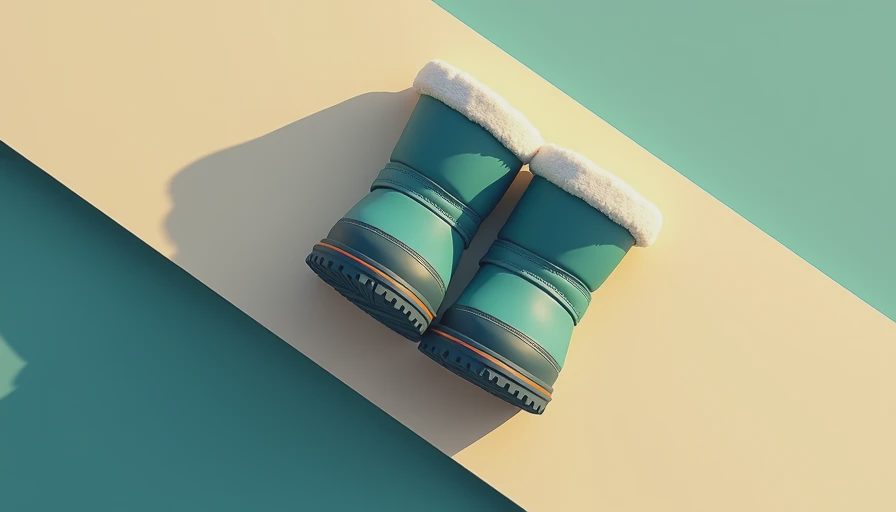
Tuesday morning, 7:42, and my youngest is standing by the door with one mitten, no hat, and a pair of moon boots kids insist are “too cool” to leave behind. The problem is not getting children excited about snow gear. The problem is finding boots that stay on, keep feet dry, and survive the trip from the car to the playground without becoming another item in the laundry-room graveyard.
After watching thousands of elementary students run, slide, stomp, and fall during my years teaching PE, I judge winter boots by practical questions. Can a child pull them on without help? Do they stay warm during a full recess? Can a parent clean them before the next school morning? That is the real test for moon boots kids will wear more than once.
What Makes Moon Boots Kids Friendly?
The best pairs have a wide opening, a simple pull tab, and enough room for a normal winter sock. A child should not need to sit on the floor and wrestle with the boot while a bus is waiting outside. Hallie can manage a pair with a roomy shaft and a sturdy loop, but she loses patience with narrow openings and complicated laces. That is useful information, not a character flaw.
Look for a waterproof outer shell, sealed seams around the lower section, and insulation that does not collapse after a few weeks. Many winter boots use a rubber or synthetic lower shell with a fabric upper. That combination works well for ordinary snow, slush, and wet sidewalks, but the upper still needs a snug closure. Snow that enters over the top will defeat an otherwise waterproof boot in about thirty seconds.
Sizing deserves attention. Do not buy three sizes too large just because winter boots are expensive. Extra space can make a child trip, while an oversized shaft lets snow fall inside. Leave enough room for toes to move and a medium-weight sock, then test walking indoors on a clean floor. If the heel lifts dramatically or the foot slides forward, keep looking.

Warmth, Traction, and the Playground Test
Warmth is not simply a matter of the thickest lining. A sweaty foot can become cold quickly when a child stops moving. During a typical recess, kids sprint for five minutes, stand around trading snacks, then sprint again. Moon boots kids use for this routine should balance insulation with a lining that can dry between wears.
Traction matters just as much. A tall boot with a slick sole is a bad match for icy steps, polished school floors, and a sledding hill. Check the tread for deep grooves and flexible rubber. The sole should bend near the front of the foot, not feel like a hard plastic platform. I have seen expensive boots fail this test and inexpensive pairs handle a snowy soccer practice just fine.
Ask where the boots will be used. A child walking from the driveway to the school entrance needs different performance from one spending two hours building a snow fort. For light snow, a waterproof insulated boot is enough. For deep snow, choose a taller shaft and a strong top closure. For wet, warm winters, a lighter pair can be more comfortable than a heavily insulated boot.
The Donovan household rule is simple: winter footwear must work with the clothes already in the drawer. If a boot only fits over one special pair of snow pants, it will sit unused. Test it with jeans, leggings, and the actual snow pants your child wears.
How to Clean and Dry Winter Boots
Most boot damage happens after the adventure, not during it. A child comes inside, drops the boots beside the heater, and leaves a puddle under the entry bench. Resist placing boots directly against a radiator or space heater. High heat can warp synthetic materials, loosen adhesives, or make rubber crack sooner.
Instead, remove the liners if the design allows it and open the closures wide. Wipe salt and mud from the outside with a damp cloth. Stuff the boots loosely with newspaper for an hour, then replace it when damp. A small fan nearby speeds drying without cooking the materials. The boots should be fully dry before the next school morning, especially around the toes and heel.
Moon boots kids wear regularly should get a quick inspection every weekend. Check the sole for separation, the pull tabs for loose stitching, and the lining for packed-down insulation. If a boot smells like a wet dog, that is not a reason to panic; it is a reason to dry the liner properly and wash removable inserts according to the care label. Three washes is my minimum before I trust any clothing or gear recommendation, and winter boots deserve the same patience.
Choosing Between Budget and Premium Pairs
A budget pair around $25 to $45 can be a smart buy for a child who outgrows footwear quickly. Look for a solid sole, a functional closure, and a liner that comes out for drying. These boots may not have the most polished finish, but they can handle school commutes and ordinary recess when fitted correctly.
Midrange pairs around $50 to $90 often improve the details parents notice after a month: stronger pull tabs, better footbeds, more flexible soles, and closures that remain secure. Brands such as Kamik, Bogs, and Sorel offer different winter styles across this range, so compare the actual boot rather than relying on the logo.
Premium boots can cost $100 or more. That price makes sense when a child spends substantial time outside, lives in a genuinely cold climate, or needs a particularly durable fit. It does not automatically mean the boot is warmer or easier to use. My rule is to pay for a feature your child will use, not a label they will outgrow by next December.
Moon boots kids wear for one season can often be passed down if the sole is intact and the liner is clean. Before storing them, dry everything completely, wipe the exterior, and keep the pair together in a cool closet. A simple note inside with the original size can save a lot of measuring next fall.
A Dad’s Final Fit Check
Before buying, have your child wear the socks they normally use in winter. Confirm that the heel stays mostly in place, the toes can wiggle, and the top closure does not pinch. Have the child walk, squat, and climb a step. If they cannot perform those basic moves comfortably indoors, the boot will not improve outside.
For online orders, measure both feet and use the brand’s size chart. Children’s feet are not always identical, and the longer foot decides the size. Read return rules before ordering because some retailers treat worn outdoor footwear differently from indoor try-ons.
Moon boots kids genuinely like are the pairs they can put on independently and forget about once recess starts. That is the goal: warm feet, dry socks, dependable traction, and no dramatic hallway boot battle. Choose the fit first, inspect the closure second, and judge the price against how often the pair will be used. Recess-tested. Dad-approved.


No comments yet — be the first to share a thought.